Back End Portfolio Report.

A structured backend engineering report covering executive summary, skills matrix, STAR project documentation, security awareness, ADRs, and lessons learned.

Back End Portfolio Report.

I am a senior software engineer with more than seven years of experience building backend systems and scalable business platforms. My strongest specialization is backend development with Golang, supported by working knowledge of JavaScript, TypeScript, PHP, C#, and Dart when product context requires flexibility.

Across fintech, HR SaaS, transportation, and internal operational products, I have worked on architecture design, API development, multi-tenant systems, observability, CI/CD, infrastructure setup, and large-scale backend improvements. I care about clean architecture, operational clarity, and building systems that stay maintainable as they grow.

This portfolio is structured to show not only what I built, but how I think: problem framing, technical decisions, architecture, security awareness, and measurable delivery impact.

Technical Skills Matrix.

CategorySkillsProficiency
LanguagesGolang, JavaScript, TypeScript, PHP, C#, DartAdvanced
DatabasesPostgreSQL, MySQL, MariaDB, MongoDB, Redis, SQL ServerAdvanced
Backend & ArchitectureREST API, Microservices, Multi-tenant Design, Clean Architecture, SOLID, System IntegrationAdvanced
DevOps & PlatformDocker, Docker Swarm, Jenkins, GitLab CI, GitHub Actions, Traefik, KongAdvanced
Observability & SecurityELK Stack, Prometheus, Grafana, New Relic, APM, RBAC, Rate LimitingIntermediate to Advanced

Featured Project Evidence.

These case studies are the strongest documentation-ready examples in the portfolio and each links to a dedicated detail page.

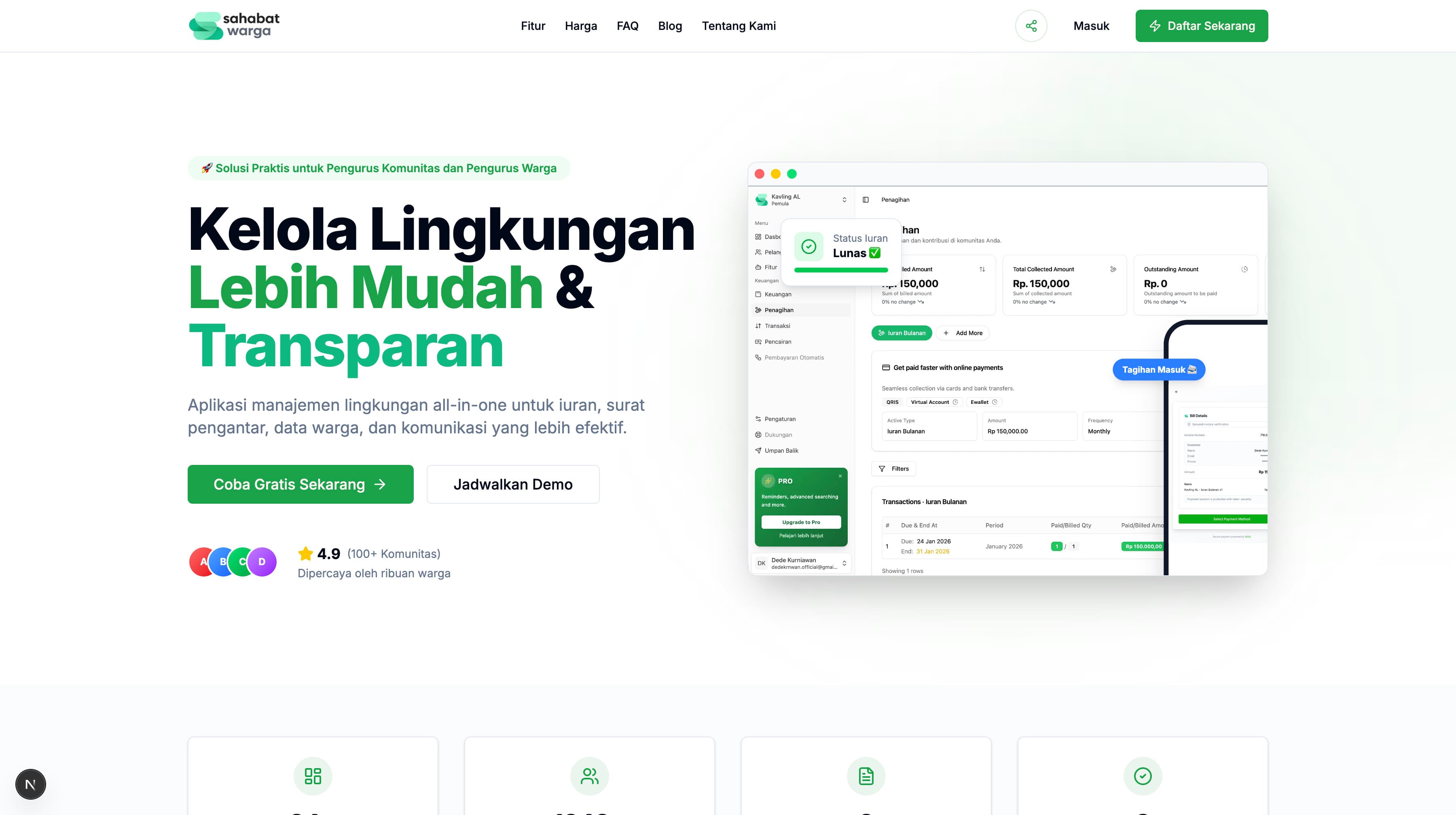
Sahabat Warga by Saga

Digital finance and resident operations platform for transparent community management.

Sahabat Warga by Saga

Built the product foundation for a digital finance and services ecosystem that helps housing clusters and neighborhood operators manage dues, resident data, introduction letters, reporting, and communication in one platform.

GolangJavaScriptTypeScriptNode.jsVue.jsReactNext.jsPostgreSQLRedisMySQLRabbitMQJenkinsDockerDocker SwarmTraefikKeycloakQRISVirtual AccountWhatsApp

AmarthaFin E-Wallet

Digital finance platform work inside Amartha's inclusive financial ecosystem.

AmarthaFin E-Wallet

Architected and delivered a full e-wallet platform from scratch inside Amartha's broader digital finance ecosystem, with a strong focus on clean architecture, observability, migration safety, and reusable backend modules.

GolangPostgreSQLRedisPrometheusGrafanaNew RelicRedashMicroservices
Klaim.id Reimbursement SaaS

Claims management platform built from scratch with multi-tenant and infrastructure ownership.

Klaim.id Reimbursement SaaS

Architected and developed a reimbursement SaaS product from scratch that aligns with Klaim.id's public positioning as a fast, customizable claims management platform connected with WhatsApp.

GolangPostgreSQLRedisMongoDBDockerDocker SwarmGitLab CIJenkinsKongTraefikELK StackElasticsearchKibanaAPM
Smart Geo Trace

Interactive maps, integrated data sources, and operational reporting.

Smart Geo Trace

Drove redevelopment of internal maps data visualization with interactive features, integrated several data sources, and improved the cost and effort of existing implementation flows.

GolangJavaScriptTypeScriptNode.jsVue.jsReactNext.jsPostgreSQLRedisMySQLMapLibre JSDockerDocker SwarmTraefikRabbitMQ

Security Awareness.

I treat security as part of delivery quality. Even when a project is not explicitly a security product, backend systems should document how access control, safe integration, observability, and operational safeguards are handled.

VulnerabilityStatusImplementation
Broken Access ControlMitigatedRole-aware permissions and approval boundaries on sensitive workflows.
Cryptographic FailuresAddressed operationallySensitive flows designed around provider-backed integrations and secure environment handling.
InjectionMitigatedBackend validation and structured query handling in service layers.
Insecure DesignMitigatedClean architecture, tenant separation, and explicit workflow modeling.
Security MisconfigurationMitigatedSecret management, proxy routing, and infrastructure setup treated as first-class concerns.
Logging and Monitoring FailuresMitigatedELK, APM, Prometheus, Grafana, New Relic, and operational dashboards.

Architecture Decision Records.

adr-clean-architecture-walletAccepted

ADR-001: Use Clean Architecture for Wallet Core Services

Context

  • The wallet platform needed to evolve safely while supporting migrations, financial workflows, and observability.
  • The backend would likely change over time, so business logic needed protection from framework and infrastructure churn.

Decision

Use clean architecture boundaries so wallet business rules remain isolated from delivery and infrastructure layers.

Positive

  • Reduced long-term coupling inside the service.
  • Made core use cases easier to reason about and evolve.
  • Supported reusable modules for logging and monitoring.

Trade-offs

  • Added design effort up front.
  • Required stronger discipline across the team.

Alternatives

Direct framework-centric service design (Rejected)

Pros: Faster at the beginning

Cons: Harder to change safely later

adr-observability-firstAccepted

ADR-002: Build Reusable Observability Into Financial Backend Work

Context

  • Distributed financial systems become expensive to troubleshoot when visibility is inconsistent.
  • Operations teams needed better support for tracing and production decisions.

Decision

Standardize reusable logging and monitoring modules and connect them to dashboards and APM.

Positive

  • Improved troubleshooting speed.
  • Raised team confidence in production changes.
  • Created reusable operational leverage.

Trade-offs

  • Required additional implementation effort outside core feature work.

Alternatives

Minimal service-specific logging only (Rejected)

Pros: Lower initial effort

Cons: Poor cross-service observability

adr-docker-swarmAccepted

ADR-003: Use Docker Swarm for Reimbursement SaaS Orchestration

Context

  • The platform needed practical service orchestration, routing, and deployment support without unnecessary operational overhead.
  • The team needed to move quickly while keeping operational control.

Decision

Use Docker Swarm as the orchestration layer together with CI/CD, proxies, and secret management.

Positive

  • Balanced operational simplicity with multi-service deployment needs.
  • Worked well with the delivery setup the team could support.

Trade-offs

  • Less feature-rich than heavier orchestration platforms.

Alternatives

More complex orchestration platform (Rejected)

Pros: Broader orchestration feature set

Cons: Higher complexity for the team at the time

adr-tenant-separationAccepted

ADR-004: Design Tenant Separation Early for HRIS Reimbursement

Context

  • The product would serve multiple customers with data isolation requirements.
  • Retrofitting tenant separation later would significantly increase risk.

Decision

Design multi-tenant sharding and permission strategy as core architecture, not as an afterthought.

Positive

  • Created a cleaner scaling path for customer growth.
  • Reduced risk around customer data separation.

Trade-offs

  • Added design and implementation complexity early.

Alternatives

Single-tenant assumptions with later migration (Rejected)

Pros: Lower early complexity

Cons: Higher long-term migration risk

adr-geo-aggregationAccepted

ADR-005: Aggregate Multi-Source Data Before Visualization

Context

  • The geo platform needed several data sources to support internal operational questions.
  • Direct frontend dependence on multiple sources would increase fragility.

Decision

Introduce an aggregation API layer so map-facing clients receive visualization-ready data.

Positive

  • Simplified client integration.
  • Made future source changes easier to manage.
  • Improved operational clarity.

Trade-offs

  • Added an additional backend layer to maintain.

Alternatives

Connect each source directly to the frontend (Rejected)

Pros: Lower initial backend work

Cons: Fragile client complexity and harder scaling

Lessons Learned & Growth

  • Architecture should protect delivery speed, not slow it down.
  • Observability is one of the highest-leverage investments for backend teams.
  • Migration and platform work deserve as much planning as feature work.
  • The best internal systems are built with the same rigor as customer-facing products.
  • Strong backend engineering combines technical clarity with business understanding.

Links & Resources

Technologies I use.

A practical snapshot of the tools and technologies I have used most often in real backend delivery.

...and many more.

Contact me.

I am eager to discuss my experience in detail and demonstrate how I can deliver impactful backend results for your team.

0/500 characters
Replies usually cover architecture reviews, contract roles, product builds, and technical leadership support.

Or contact me with...